


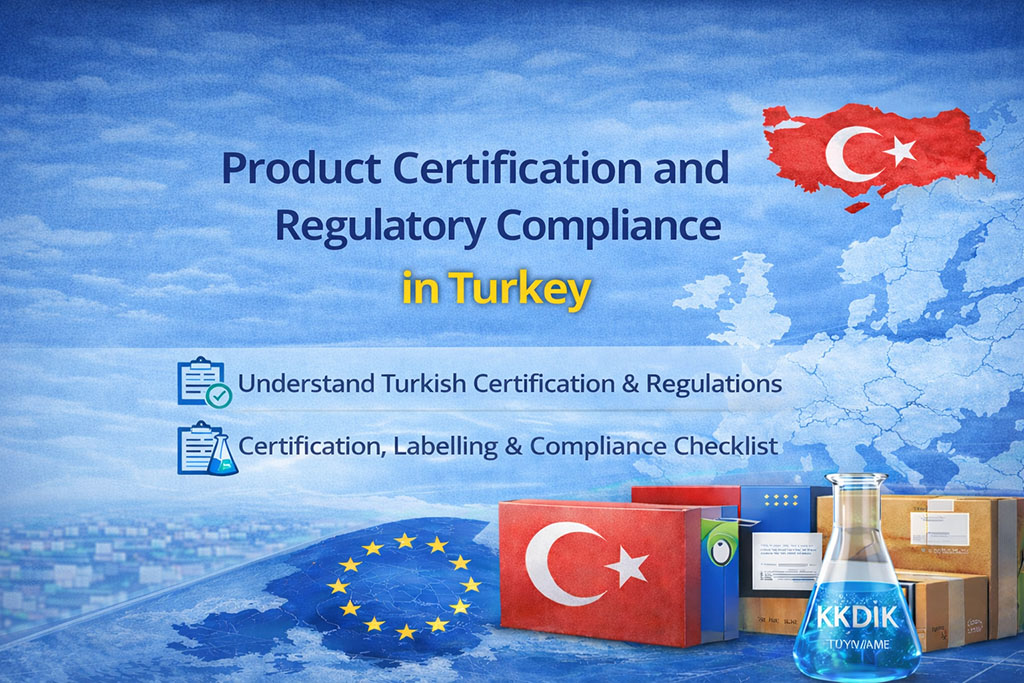
Export or Market Entry in Turkey: Certification Consulting and the Strategic Sequence Foreign Companies Often Get Wrong
Market entry in Turkey is often described as simple and accessible, especially for foreign companies familiar with European standards and CE marking. In reality, approaching market entry in Turkey without understanding its regulatory logic frequently leads to delays, blocked shipments and costly mistakes.
European standards are widely referenced, CE marking is recognised, and the overall perception is that entering Turkey is simply a lighter version of entering the EU.
In practice, this assumption is one of the most common traps.
I have seen many projects slow down or collapse not because products were non-compliant, but because companies misunderstood how regulatory logic actually works in Turkey. Here, the sequence of decisions is not a technical detail. It is the difference between smooth entry and months of delays, blocked shipments, financial exposure and damaged relationships with local partners.
In this article, I explain how export and market entry really work in Turkey, why applying an EU mindset often backfires, and how certification consulting must be aligned with structure from the very beginning.
📊 Why Market Entry in Turkey Is Not “EU Lite”
Turkey is a large and attractive market. According to World Bank data, it is the 17th largest economy globally, with a nominal GDP of around $1.1 trillion.
Foreign direct investment exceeded $13 billion in 2024, with manufacturing and services leading the inflows.
Authoritative source
World Bank – Turkey country data
On paper, Turkey appears highly harmonised with the EU. This is partly true: the EU–Turkey Customs Union, in place since 1995, aligns many technical regulations. However, enforcement works very differently.
Unlike the EU’s relatively standardised approach, Turkish authorities such as the Ministry of Trade and the Turkish Standards Institution (TSE) apply a more discretionary and hands-on model. Local accountability matters early, not later.
A European Commission report (2023) highlighted that non-tariff barriers and inspections caused delays for around 25% of EU exporters to Turkey. For non-EU companies, the exposure is even higher.
Authoritative source
European Commission – Market Access Database (Turkey)
The most common misconception is thinking that CE marking alone guarantees smooth access, or that certification can be finalised before defining local structure. In Turkey, this logic is often reversed.
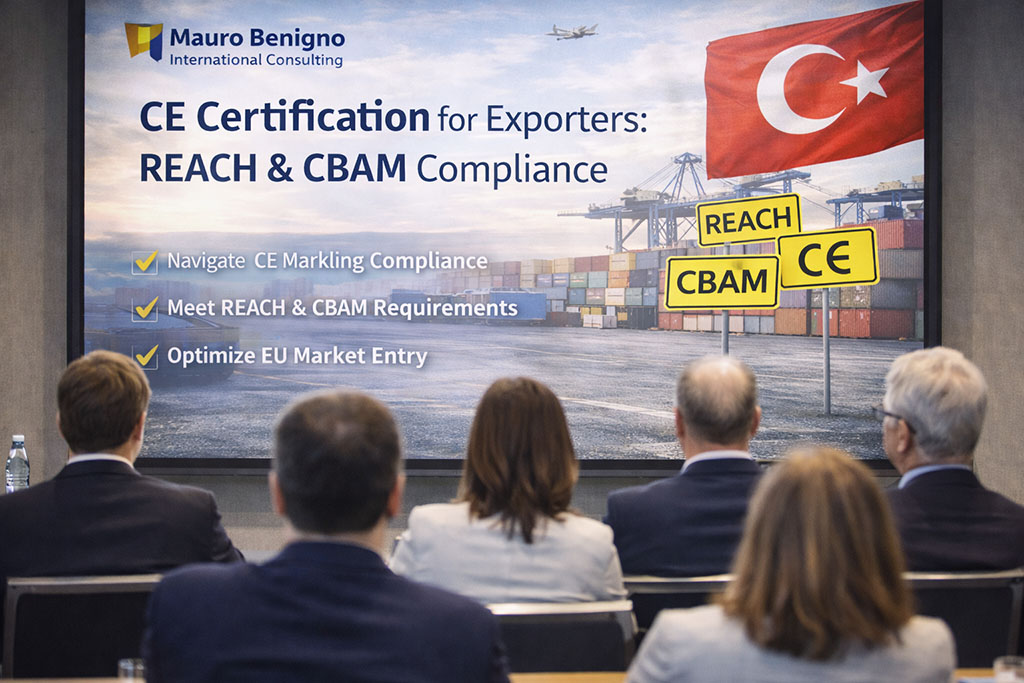
🚚 Export to Turkey: When It Works — and Why It Often Breaks Down
Exporting to Turkey without a local presence can work, but only in specific conditions.
Typically, it requires a strong local importer who is experienced, well-organised and willing to assume regulatory responsibility. In this model, the importer acts as the economic operator and interfaces with customs and authorities.
On the surface, this looks straightforward.
In reality, it carries hidden risks.
Under Turkey’s Product Safety and Inspection Law (No. 7223), importers face direct administrative and financial liability. Fines for non-compliance can reach 500,000 TRY per violation, making importers increasingly risk-averse.
Surveys conducted by the Istanbul Chamber of Commerce show that a significant share of Turkish importers hesitate to work with foreign suppliers unless documentation, labelling and regulatory exposure are fully clarified from day one.
I have seen this pattern repeatedly. In one case, a German machinery exporter shipped CE-marked equipment under an export model. Labelling inconsistencies triggered objections from the importer, resulting in a three-month customs hold and a stalled commercial relationship.
Export can work for pilot volumes, limited product ranges or low-risk categories. For scaling, it is often a temporary solution rather than a sustainable strategy.
🏗️ Market Entry in Turkey: Why Structure Must Come Before Certification
This is where many foreign companies make their most expensive mistake.
They pursue certification first, assuming that structure can be addressed later. In Turkey, this approach frequently fails.
In sectors such as electronics, medical devices or chemicals, regulatory procedures are directly linked to who holds responsibility locally. Registrations with bodies such as the Turkish Medicines and Medical Devices Agency often require a local entity or authorised representative before compliance can even be completed.
A 2024–2025 Deloitte Turkey assessment showed that more than one third of foreign investment projects experienced delays due to misaligned operational structures, not technical non-compliance.
Establishing a Turkish subsidiary, branch or formal local representation is not an administrative afterthought. It is often the gateway that allows certification to become valid and usable.
This is where market entry consulting becomes strategic rather than procedural.
🏷️ CE Certification in Turkey: Recognised, but Not a Free Pass
CE marking is recognised in Turkey, and this is an advantage.
However, it is not a guarantee of frictionless entry.
Turkish customs authorities may still request additional documentation, original test reports, notarised translations or local risk assessments. In practice, CE marking is treated as a baseline, not a conclusion.
Audits conducted by the Turkish Standards Institution revealed that a significant share of CE-marked imports still faced rejection or delays due to traceability gaps or labelling inconsistencies.
The issue is not certification itself, but the assumption that EU enforcement logic applies unchanged. In Turkey, certification consulting must account for national interpretation and administrative discretion.
For a structured overview, see:
👉For a structured overview of CE certification requirements for exporters, see
🏷️ Product Labelling: Where Many Market Entry Plans Fail Silently
Product labelling is one of the fastest ways to lose time and credibility in Turkey.
Turkish-language labelling is mandatory, and authorities pay close attention to warnings, consumer information and traceability. Even minor inconsistencies can trigger inspections.
According to Ministry of Trade data, labelling issues accounted for approximately 28% of import rejections in 2024–2025.
This is why effective certification consulting for Turkey integrates labelling strategy early, not as a final adjustment.
🧪 KKDIK (Turkey REACH): A Compliance Deadline You Cannot Postpone
For chemicals and industrial materials, KKDIK is often the decisive compliance factor.
While inspired by EU REACH, KKDIK operates under its own enforcement priorities and timelines. Pre-registration closed in 2020, with full registration phases continuing toward 2026.
In 2025, updated implementation rules (Usul ve Esaslar) reinforced the requirement for complete registration even for substances already placed on the market.
Several foreign manufacturers have already faced operational disruption. In one anonymised case, an Italian chemical producer lost over six months due to KKDIK registrations that were technically correct but not aligned with the company’s local operating structure.
Under KKDIK, compliance without structure is fragile.
| Aspect | EU (REACH) | Turkey (KKDIK) |
|---|---|---|
| Registration timeline | Phased, flexible | Fixed deadlines toward 2026 |
| Local responsibility | Optional for non-EU | Mandatory local entity or authorised representative |
| Pre-registration | Ongoing | Closed in 2020 |
| Typical penalties | Up to €100k+ | Up to 500,000 TRY per violation |
⚠️ The Biggest Strategic Mistake: Treating Turkey Like the EU
The classic EU sequence — certify first, expand later — does not reliably work in Turkey.
A PwC Turkey analysis showed that companies adapting to Turkey’s structure-first logic reduced market entry timelines by approximately 40%.
In Turkey, structure often unlocks compliance. Not the other way around.
🧭 Export, Trading or Direct Market Entry: Choosing the Right Path
Some companies succeed with export models, especially for pilot volumes and low-risk sectors.
Others require a Trading or Importer-of-Record structure when distributors refuse regulatory exposure.
For many, direct market entry becomes unavoidable once scale, brand control or regulatory complexity increases.
The key is not choosing the simplest option, but the correct sequence.
This is exactly where market entry and certification consulting for Turkey creates value.
Related strategic context:
👉 Import–Export Advisory for EU, Turkey & CIS Markets
👉 Certification Consulting for EU, Turkey and CIS Markets
🚀 Ready to Enter Turkey the Right Way?
Turkey offers real opportunities — but only to companies that approach it with clarity rather than assumptions.
If you want to avoid delays, rework and unnecessary exposure, the first step is not rushed certification, but a structured evaluation of strategy, structure and responsibility.
Frequently Asked Questions on Market Entry in Turkey
Do foreign companies need a local entity for market entry in Turkey?
Not always, but in many regulated sectors a local structure becomes unavoidable.
Exporting to Turkey can work in limited scenarios when an experienced importer is willing to assume full regulatory responsibility. However, for machinery, chemicals, medical devices and industrial products, Turkish authorities often require a clearly defined local economic operator. In practice, establishing a local entity or using a structured trading model frequently unlocks certification and compliance processes that cannot be completed remotely.
Is CE certification enough to sell products in Turkey?
No. While CE certification is recognised in Turkey, it is not sufficient on its own to guarantee market access. Turkish customs and authorities may require additional documentation, local verification, Turkish-language labelling and alignment with national regulations. For chemical and industrial products, CE certification must also be coordinated with KKDIK (Turkey REACH) obligations. Treating Turkey as an “EU-lite” market is one of the most common causes of delays and blocked shipments.
What is the difference between exporting to Turkey and full market entry?
Exporting to Turkey relies on a local importer acting as the importer of record and assuming regulatory liability. This model works mainly for limited volumes and low-risk products.
Market entry, on the other hand, involves establishing a local structure or operational presence, allowing companies to control certification, compliance, pricing and distribution directly. In Turkey, the correct sequence often starts with structure first and compliance second, the opposite of what many companies are used to in the EU.