


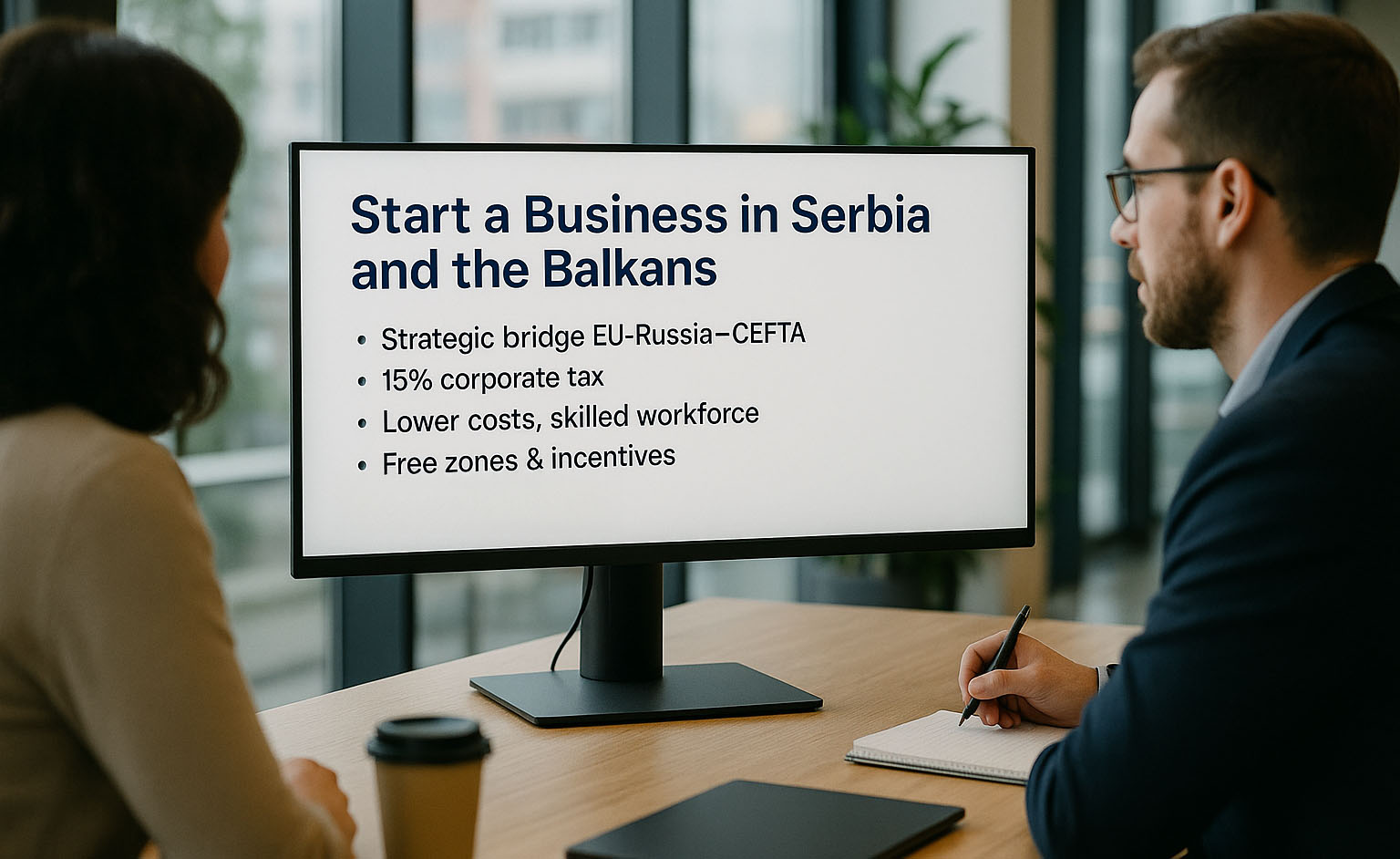
🇷🇸 Business Consulting in Serbia: Starting and Growing a Business in the Balkans
Business consulting Serbia has become a strategic necessity for companies looking to expand in the Balkans without the cost pressure and rigidity of Western Europe.
Yet, through my business consulting in Serbia, I’ve seen how this country has quietly become one of the most strategic entry points for companies looking to grow without being suffocated by EU-level costs and rigidity.
Serbia is not a “cheap alternative.”
It is a strategic platform — and once you understand how it really works, the opportunities become very concrete.
🧠 Why Business Consulting in Serbia Is No Longer Optional
Every serious expansion decision starts with clarity.
When companies contact me for business consulting in Serbia, they are usually facing the same pressure: rising costs, shrinking margins, and limited room to manoeuvre in Western Europe.
Serbia offers breathing space — but only if approached with structure.
This is why business consulting matters. Regulations, incentives, labour models and export frameworks are favourable, but they must be interpreted correctly. Without guidance, many companies underestimate the strategic depth of the Serbian market or misread the real costs.
This is especially true for companies already considering a regional setup across the Balkans, where Serbia often acts as the operational anchor.
👉 Business Expansion Elite Academy – Balkans
🌍 Serbia’s Strategic Position in the Balkans and Beyond
From a logistics and trade perspective, Serbia sits exactly where a modern business wants to be.
Through Corridor X, the Danube river, and strong road connections, Serbia links Central Europe, Southern Europe and the Balkans. This positioning is one of the main reasons companies combine business consulting in Serbia with regional planning across neighbouring countries.
For companies comparing different relocation scenarios, I often recommend analysing Serbia alongside Turkey and the wider Balkans:
👉 Business Consulting for Turkey & the Balkans
👉 Manufacturing Relocation: Turkey & the Balkans
Authoritative context:
• World Bank – Serbia Trade Overview
• UNCTAD – Investment Trends in South-East Europe
💼 Real Operational Costs Explained Through Business Consulting in Serbia
Costs are where myths usually collapse.
Through hands-on business consulting in Serbia, I help companies understand what operating here really costs — not theoretical figures, but real numbers.
Labour costs remain competitive without compromising quality. Skilled professionals, engineers, and technical staff offer an excellent cost–value ratio. Office space, utilities, and digital infrastructure are significantly more affordable than in Western Europe, while operational reliability remains high.
This cost structure becomes even more powerful when combined with regional manufacturing or outsourcing strategies in the Balkans.
💰 Taxation & Incentives in Serbia
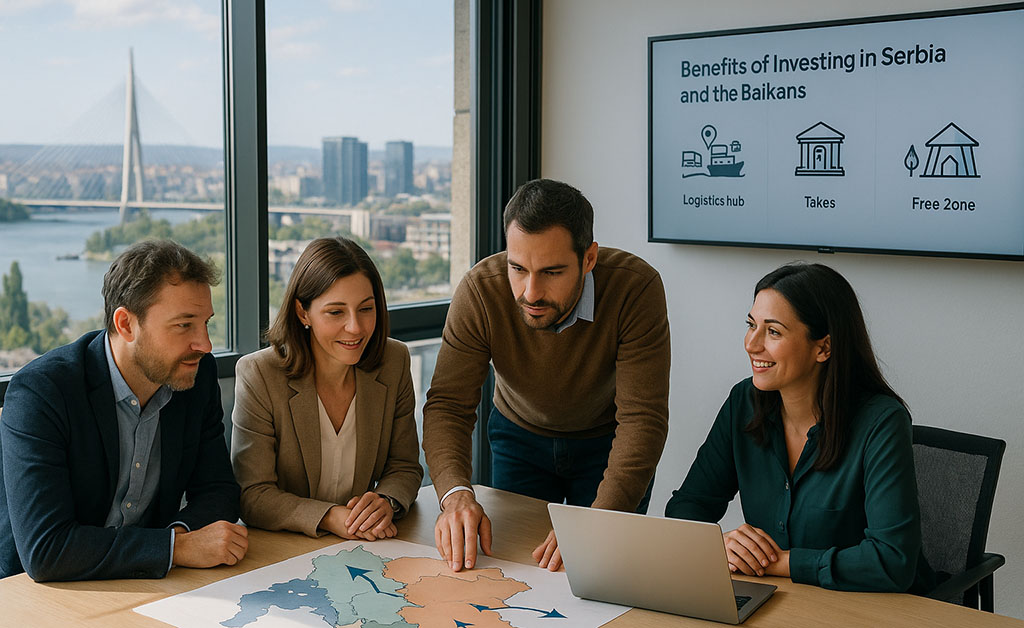
Serbia’s fiscal environment is one of the strongest reasons companies relocate or expand here — but incentives only work if structured properly.
Corporate tax remains at 15%, among the lowest in Europe. Free zones, employment incentives, and investment grants can significantly reduce the effective tax burden over a 3–10 year horizon.
This is where business consulting in Serbia goes beyond numbers and becomes strategic modelling: incentives must align with export routes, production scale and long-term positioning.
Official reference:
• OECD – Investment Incentives and Taxation
🚚 Export and Market Access Through Serbia
Serbia is exceptionally strong as an export base.
Thanks to trade agreements with the EU, CEFTA countries, Turkey, and the Eurasian market, companies operating from Serbia gain access to multiple regions with reduced or zero duties.
For exporters, this is often combined with structured advisory across Turkey, the EU and CIS markets.
👉 Import–Export Advisory for EU, Turkey & CIS
From an internationalisation perspective, Serbia integrates seamlessly into broader growth strategies.
👉 International Market Expansion Consulting
🏭 Serbia and Manufacturing Relocation in the Balkans
Many companies I advise start with business consulting in Serbia, then expand into manufacturing or parallel production across the Balkans.
Serbia works particularly well as a coordination hub for production distributed between North Macedonia, Bosnia, Montenegro and Turkey. This hybrid model reduces risk while improving delivery times and cost control.
👉 Manufacturing Relocation Consulting in the Balkans
This is no longer an exception — it’s becoming a standard strategic move.
🤝 How I Support Companies Through Business Consulting in Serbia
My role is not theoretical.
I work with companies on strategic market entry, legal and operational structuring, partner and supplier validation, export and compliance alignment, and regional expansion across the Balkans and Turkey.
Every project is built around clarity, control and long-term sustainability, not shortcuts.
🚀 Is Business Consulting in Serbia the Right Move for You?
Serbia is not for everyone — and that’s exactly why it works so well for the right companies.
If you are looking for flexibility instead of rigidity, structure instead of improvisation, and growth instead of survival, then business consulting in Serbia may be the strategic step that changes your trajectory for the next decade.
Frequently Asked Questions on Market Entry in Serbia and the Balkans
What does business consulting in Serbia typically include?
Business consulting in Serbia covers much more than company registration. It usually includes market entry analysis, legal and tax structuring, partner and supplier validation, incentive assessment, and export strategy. The goal is to help companies operate efficiently in Serbia while aligning local operations with broader EU, Balkan, and international markets.
Is Serbia a good base for expanding into the Balkans and EU markets?
Yes. Serbia is often used as a strategic hub for regional expansion. Through business consulting in Serbia, companies can structure operations that serve the EU, the Balkans, Turkey, and CIS markets thanks to favourable trade agreements, competitive costs, and efficient logistics routes. This makes Serbia particularly attractive for manufacturing, outsourcing, and export-oriented businesses.
How long does it take to set up and become operational in Serbia?
With proper business consulting in Serbia, most companies become operational within 6 to 8 weeks. This timeline includes company incorporation, bank account opening, tax registration, and initial operational setup. More complex projects involving manufacturing relocation or export structuring may require additional planning, but early-stage operations can start quickly when the process is managed correctly.